
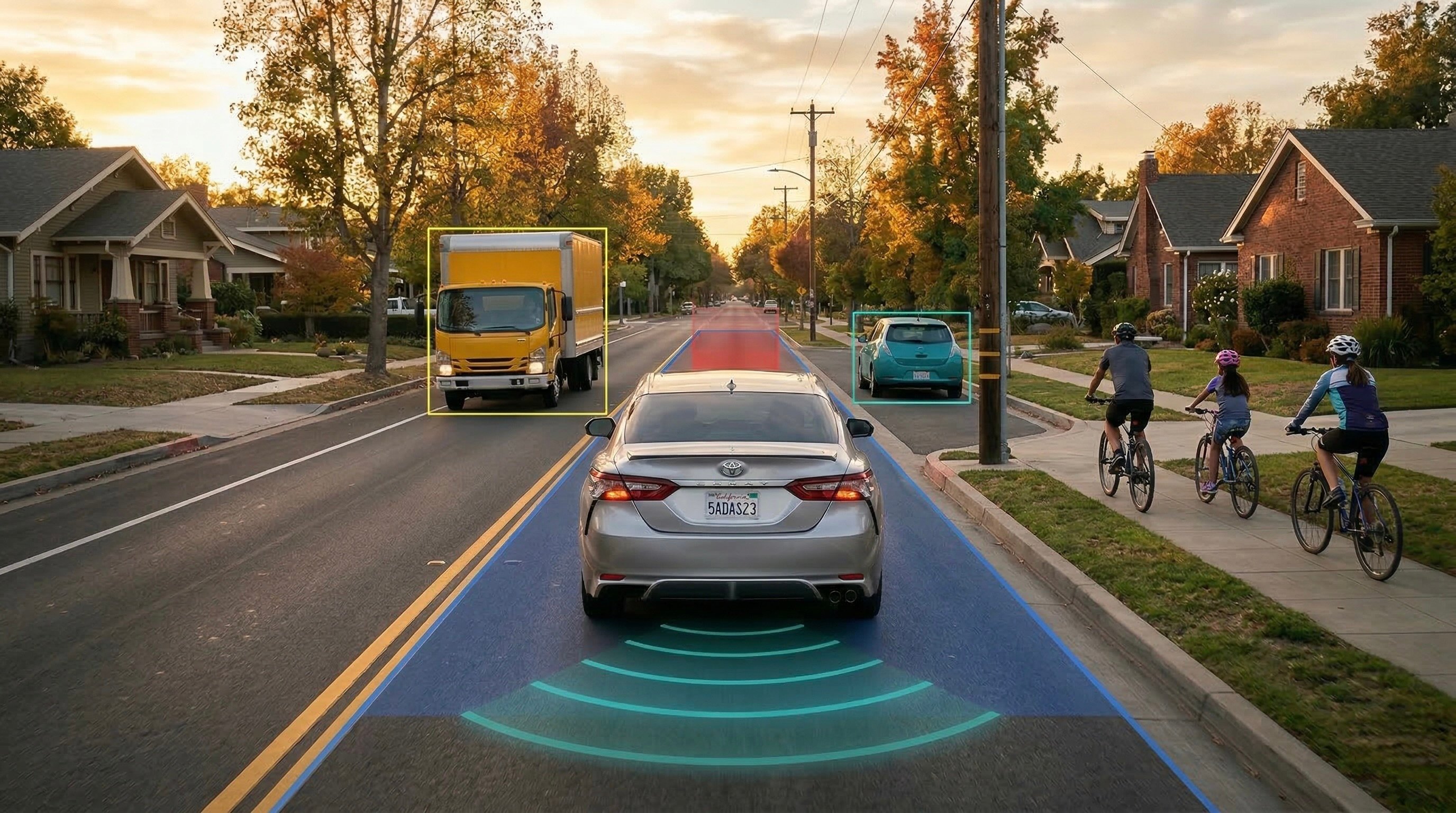
If you run a collision repair shop today, you have likely noticed something changing about the vehicles coming through your doors.
Repairs that once focused mostly on sheet metal, paint, and mechanical components now frequently involve cameras, radar sensors, and advanced electronic safety systems.
These technologies fall under the umbrella of Advanced Driver Assistance Systems, commonly referred to as ADAS.
Understanding ADAS Systems
ADAS adoption has accelerated rapidly over the past decade. Systems that were once limited to premium vehicles are now appearing on everyday models across nearly every manufacturer. Even entry-level vehicles now include driver assistance technologies that were once considered luxury features.
For collision repair professionals, this shift has real implications.
Vehicles equipped with ADAS often require precise sensor calibration after common repairs. Windshield replacement, bumper removal, suspension work, and structural repairs can all affect how these safety systems interpret the road environment.
According to research from the Insurance Institute for Highway Safety, advanced driver assistance technologies have the potential to significantly reduce crashes and injuries when they function as designed. As these systems become more common, ensuring they operate correctly after repairs becomes increasingly important.
In this article, we’ll walk through the most common ADAS systems found on modern vehicles, how they operate, and why they are reshaping collision repair.
Need help finding the right ADAS frame? Use our free ADAS Equipment Advisor.
The Most Common ADAS Systems on Today’s Vehicles
ADAS is not a single technology. It is a collection of safety systems designed to assist drivers and help prevent collisions.
Several systems appear frequently on modern vehicles:
- Blind Spot Warning (BSW)
- Lane Departure Warning (LDW)
- Lane Keep Assist (LKA)
- Automatic Emergency Braking (AEB)
- Rear Cross-Traffic Warning (RCW)
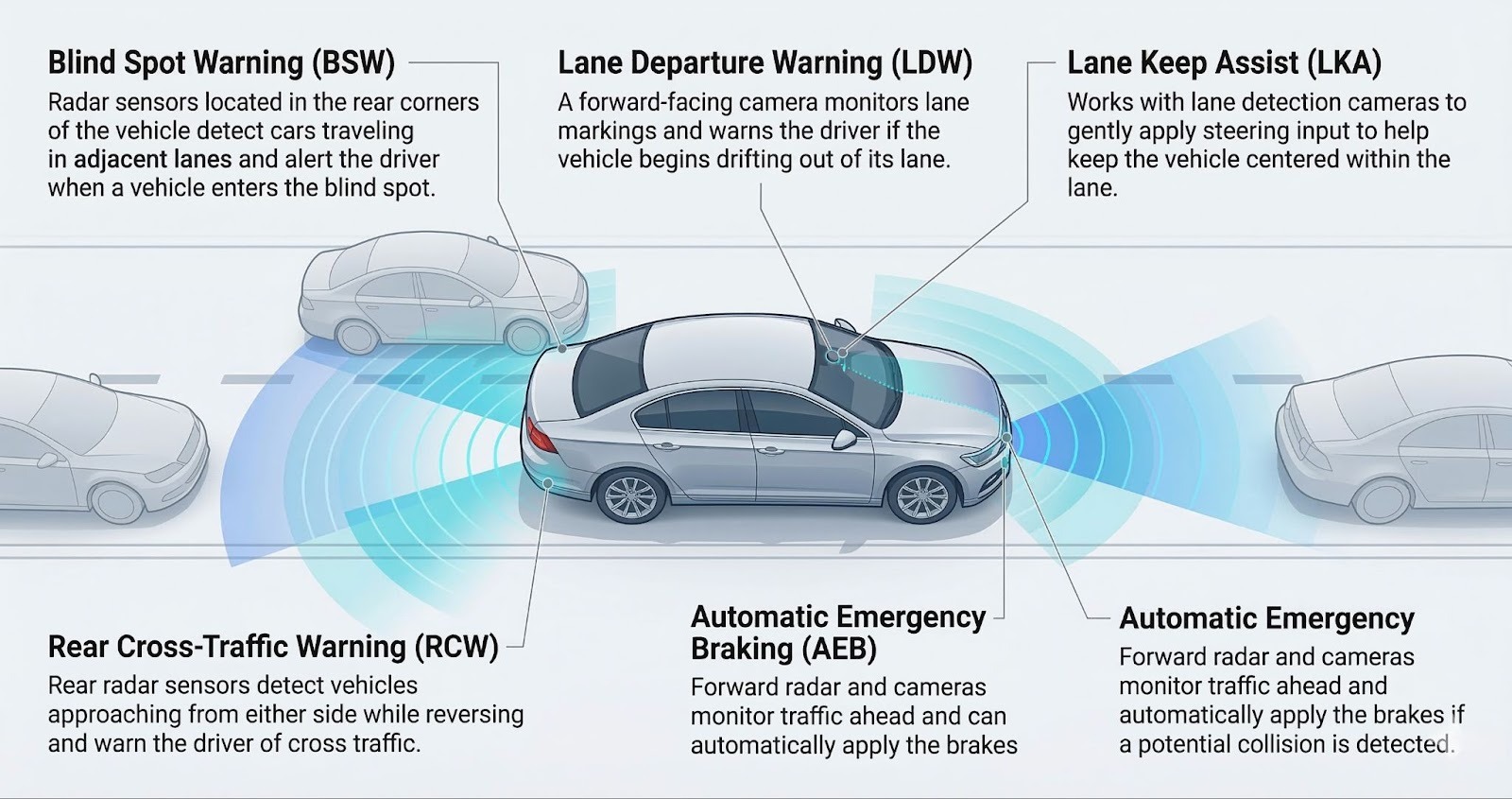
Each of these systems relies on sensors that monitor the vehicle’s surroundings and respond when a potential hazard is detected.
As older vehicles age out of circulation and newer models enter the repair cycle, collision centers are seeing an increasing percentage of vehicles equipped with these technologies.
For repair facilities, this means ADAS calibration is becoming a routine part of the repair process rather than an occasional specialty service.
How Automakers Package ADAS Systems
One reason ADAS technology can feel confusing is that automakers often package similar safety technologies under different brand names.
The underlying technologies may be similar across manufacturers, but each brand markets them differently.
Examples include:
Within those packages, individual systems may also carry unique names. For example, one manufacturer’s automatic emergency braking system may be labeled differently by another.
From a technician’s perspective, however, the branding matters far less than the hardware involved.
Whether the system is called Toyota Safety Sense or Ford Co-Pilot360, the repair process ultimately focuses on the same core components: cameras, radar sensors, and control modules that interpret environmental data.
The Sensors That Power ADAS Systems
ADAS technologies rely on several core sensor types that gather information about the vehicle’s surroundings.
The most common include:
- Forward-facing cameras
- Radar sensors
- Lidar sensors (although these are less common)
Cameras
Forward-facing cameras are typically mounted behind the windshield near the rear-view mirror. These cameras track lane markings, vehicles, pedestrians, and road signs.
Because cameras interpret visual information, their positioning must be extremely precise. Even small changes in alignment can affect how the system interprets lane position or nearby vehicles.
Radar
Radar sensors measure distance and speed using radio waves. They are commonly used for adaptive cruise control, blind spot monitoring, and forward collision detection.
Radar sensors are often located behind front bumpers or inside rear quarter panels.
Lidar
Some advanced driver assistance systems incorporate lidar sensors that measure distance using laser light. While less common today, lidar technologies are becoming more prominent in emerging automated driving systems.
More detailed technical research on these technologies and their safety impact can be found in the Advanced Driver Assistance Systems research published by the Insurance Institute for Highway Safety.
Passive Systems vs Active Safety Systems
ADAS technologies generally fall into two categories.
Passive systems warn the driver when a potential hazard is detected.
Examples include:
- Blind Spot Warning
- Basic Lane Departure Warning
These systems notify the driver through visual alerts, sounds, or steering wheel vibration.
Active safety systems go a step further.
Examples include:
- Lane Keep Assist
- Automatic Emergency Braking
Instead of simply issuing warnings, these systems can intervene by applying braking or steering input to help prevent or mitigate a collision.
Many modern vehicles combine both passive and active safety technologies, creating multiple layers of driver assistance.

‘Sensor Fusion’ and the Growing Complexity of Vehicles
Modern vehicles increasingly rely on a concept known as sensor fusion.
Rather than relying on a single sensor, many ADAS systems combine information from multiple sources simultaneously.
For example, a forward collision system may integrate:
- Camera image data
- Radar distance measurements
- Wheel speed sensor inputs
- Stability control data
By combining multiple streams of information, the system can more accurately determine whether a collision risk exists.
This reflects a larger shift in vehicle design. Modern vehicles often contain dozens of control modules communicating across complex electronic networks. These modules coordinate braking, steering, stability control, and driver-assistance technologies in real time.
For collision repair professionals, this means repairs must be viewed from an integrated systems perspective rather than focusing on a single mechanical component.
Why ADAS Calibration Matters After Repairs
Because ADAS systems rely on precise sensor alignment, many common repairs require recalibration. Even small changes in sensor positioning can affect how the system interprets its surroundings.
Common repairs that may require calibration include:
- Windshield replacement
- Bumper removal or replacement
- Suspension or alignment work
- Radar sensor replacement
- Structural repairs
Calibration procedures ensure that cameras and radar sensors are aligned according to manufacturer specifications.
Many shop owners are surprised to learn that calibration may still be required even when the vehicle does not display a diagnostic trouble code. ADAS systems often rely on sensor positioning rather than fault detection, which means the system may appear to operate normally even when calibration is necessary.
➡️ For a deeper explanation of this issue, see No DTC Codes? Busting the Myth That Calibration Isn’t Required.
Historically, early calibration procedures were often performed manually using measurements, reference points, and physical targets placed in front of the vehicle. Technicians would measure distances from the vehicle and position targets using tape measures, plumb lines, and other manual tools.
While those procedures could work, they introduced variability depending on how measurements were taken and how accurately targets were positioned.
Modern calibration systems help reduce this variability by using frames, alignment references, and measurement tools designed to improve consistency and repeatability.
ADAS Adoption Is Creating a Massive New Service Market for Collision Centers
Beyond the safety benefits, ADAS technology is rapidly creating one of the largest new service opportunities the collision repair industry has seen in decades.
Industry analysts estimate that the ADAS calibration services market in North America already exceeds $1.2 billion annually, with strong continued growth expected across the decade.
➡️ See From Niche to Necessity: The Rise of ADAS Calibration in the US.
Research indicates that ADAS-equipped vehicles represented roughly 11% of the U.S. vehicle fleet in 2020, but that figure was expected to reach 50% by 2025 and nearly 75% by 2030.
Every time a vehicle experiences a collision, windshield replacement, suspension change, or even an alignment adjustment, those sensors may require recalibration before the vehicle can safely return to the road.
As a result, the U.S. aftermarket for ADAS calibration services alone is projected to reach approximately $3 billion annually by 2030, assuming widespread adoption across independent repair facilities.
In addition, performing calibrations internally can provide several advantages:
- Reduced sublet delays
- Greater control over the repair process
- Improved key-to-key cycle time
- More consistent quality control
- Increase revenue
Shops considering this step must evaluate equipment requirements, shop space, technician training, and the types of vehicles they commonly repair.
As the vehicle fleet continues to evolve, many collision centers are recognizing that understanding ADAS technology is becoming essential to maintaining modern repair capabilities.
The Bottom Line: ADAS Is Reshaping Collision Repair
ADAS technology is transforming the vehicles collision repair shops service every day. Systems such as blind spot monitoring, lane departure warning, and automatic emergency braking rely on cameras and radar sensors that must be precisely aligned to function correctly after repairs.
As these systems become standard across the vehicle fleet, calibration is becoming a routine part of modern collision repair. For many shops, each required calibration also represents a new service opportunity tied directly to collision repairs, windshield replacements, alignments, and other common work.
Understanding how ADAS systems operate helps shop owners make informed decisions about calibration workflows, equipment investments, and how this growing service category may fit into their long-term repair capabilities and revenue mix.