
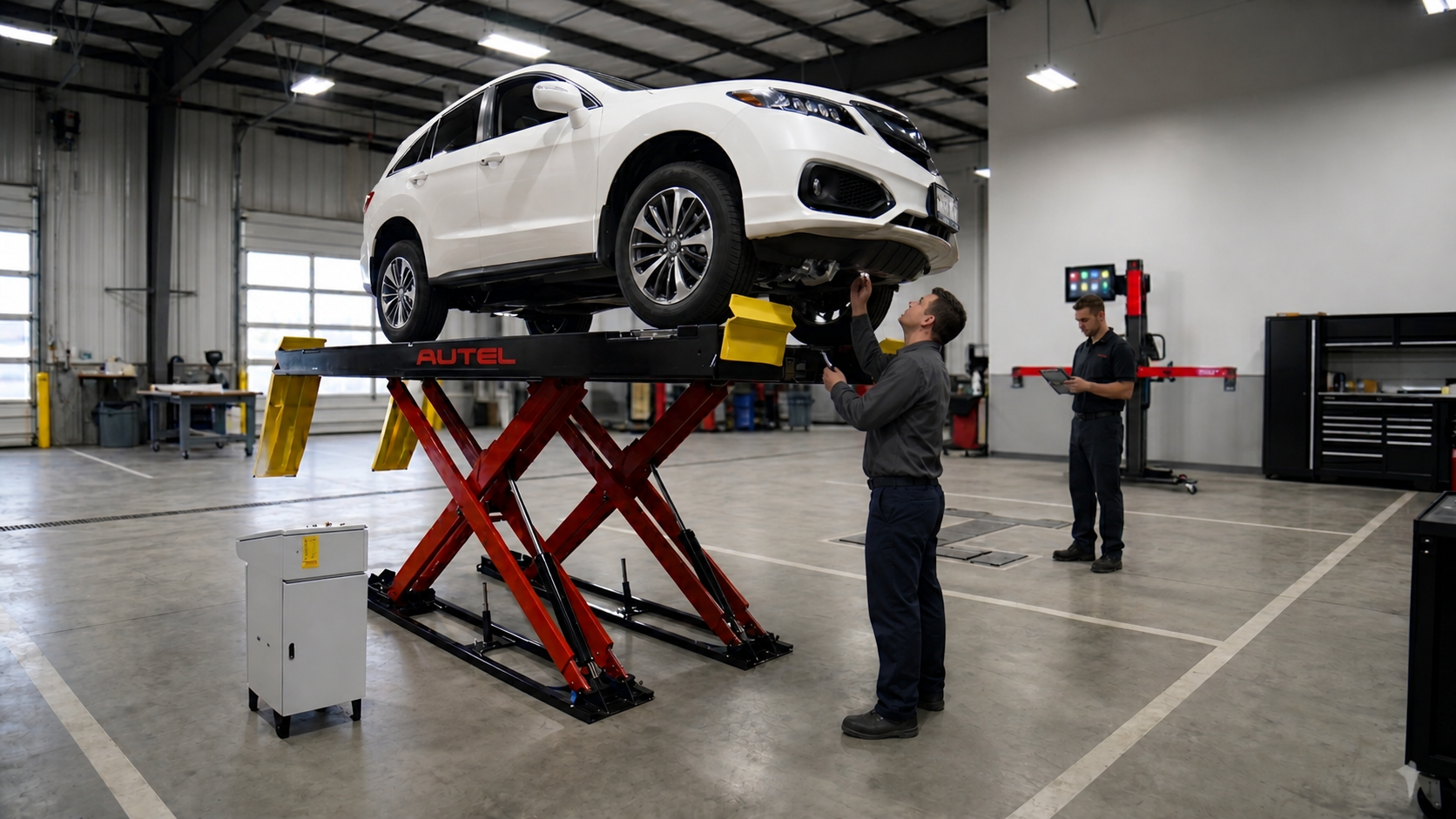
Every ADAS calibration begins with an assumption that is rarely stated but always present: the vehicle’s geometry is correct.
That assumption carries more weight than most shops realize. Cameras, radar modules, and sensors are not calibrating themselves in isolation. They are being calibrated relative to the physical position of the vehicle. If that position is even slightly off, the entire process is compromised before it begins.
This is where the gap often appears. A vehicle comes in for a calibration following a repair. The procedure is followed, the scan tool completes successfully, and everything appears correct on paper. Yet on the road, something feels off. The system may respond late, overcorrect, or behave inconsistently.
In many of these cases, the issue is not the calibration itself. It is what came before it.
Wheel alignment is not a separate operation that sits alongside calibration. It is the foundation that determines whether the calibration has any chance of being accurate.
Need help finding the right ADAS frame? Use our free ADAS Equipment Advisor.
Small Deviations, Big Consequences
Modern ADAS systems operate within extremely tight tolerances. What appears negligible in the bay can translate into meaningful error at speed.
A slight deviation in thrust angle, often measured in tenths of a degree, changes the true direction the vehicle is traveling. The steering wheel may appear centered, but the vehicle itself is not moving in a perfectly straight path. That distinction is subtle to a driver but critical to the system.
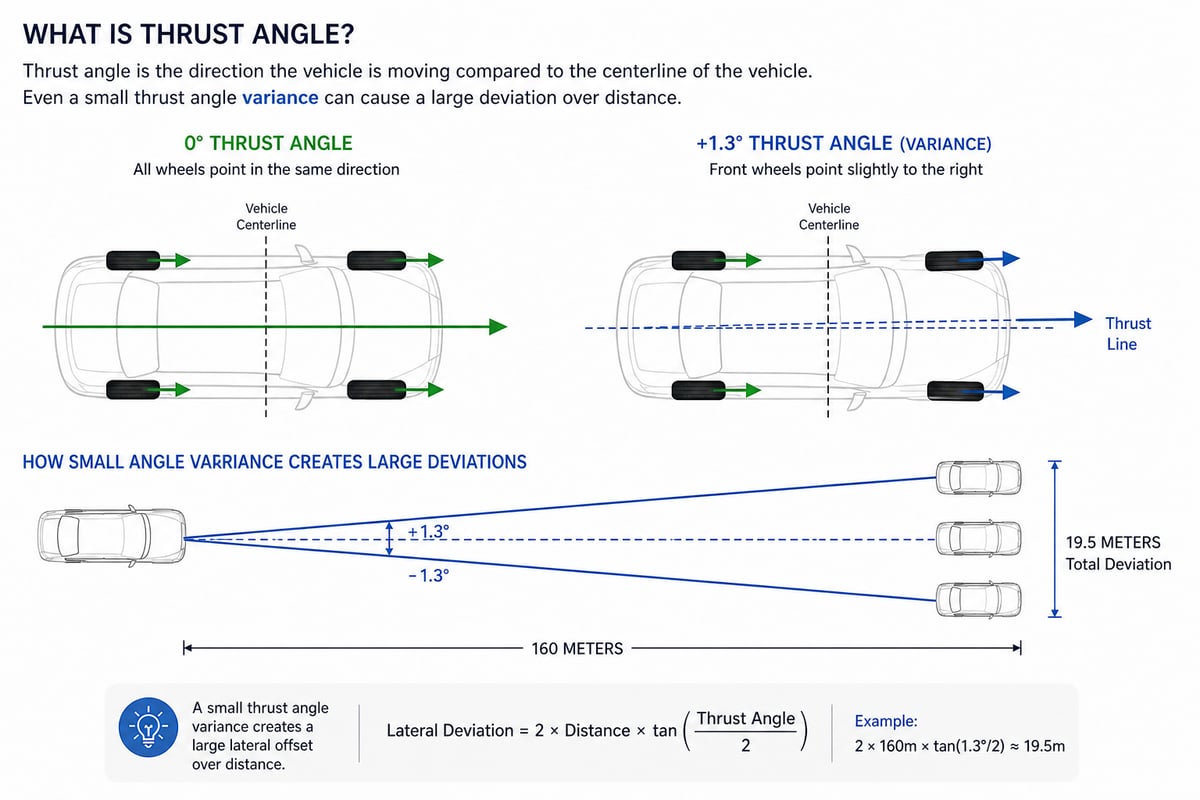
These systems are not simply detecting lane lines or vehicles ahead. They are constantly performing calculations based on multiple inputs, including steering angle, yaw rate, and vehicle speed. When the underlying geometry is incorrect, those calculations are built on flawed data.
Over distance, the impact becomes more pronounced. A small angular error can shift a sensor’s perceived target position by several feet at highway range. That is how a vehicle can pass a calibration in the shop yet behave unpredictably on the road.
This is where alignment moves from a mechanical consideration to a safety concern.
From Centerline to Thrust Angle: A More Accurate Reference
Historically, calibration procedures relied on the centerline of the vehicle. That approach assumed the vehicle’s original geometry remained intact over time.
In practice, that is rarely the case.
As vehicles accumulate miles, slight variations develop. Suspension wear, tire wear, and minor impacts can all influence how a vehicle actually travels down the road. The centerline may remain fixed in theory, but the true direction of travel shifts.
Modern calibration processes account for this by referencing thrust angle instead. The thrust angle reflects the direction the vehicle is actively being pushed by the rear axle. It is a more accurate representation of real-world movement.
This shift has important implications. If calibration is performed without confirming that thrust angle is within specification, the system is being aligned to a moving target.
In that context, skipping alignment is not just an oversight. It is a fundamental breakdown in the calibration process.
The Variables That Quietly Disrupt Accuracy
Alignment itself is only part of the equation. There are additional factors that can influence the outcome, often without being immediately visible.
Ride height is one of the most common. Even small changes can alter the angle at which cameras and sensors are positioned relative to the road. A vehicle that is slightly out of spec due to load, suspension condition, or incomplete repair sequencing can introduce error before calibration even begins.
Suspension integrity plays a similar role. Components that are worn or inconsistent may allow alignment readings to fluctuate. The vehicle may appear within specification at one moment and drift slightly at another, creating instability in the calibration reference.
Then there is the Steering Angle Sensor. After alignment, the system must be told what “straight ahead” actually is. If that reset is skipped, the vehicle can interpret straight-line driving as a turn. The result is not always an immediate fault code, but rather subtle system behavior that does not match real-world conditions.
Individually, these variables may seem minor. Together, they define whether the calibration is anchored in reality or not.

When the Repair Doesn’t Call for Alignment—But the Vehicle Does
One of the more challenging aspects of this issue is that alignment is not always included in the original repair scope.
A vehicle may come in for a windshield replacement, a radar removal and reinstall, or a relatively minor collision repair. There may be no direct indication that suspension work was performed. From an estimating standpoint, alignment may not appear necessary.
From a calibration standpoint, that assumption can be misleading.
A vehicle with significant mileage, uneven tire wear, or subtle drift may still require alignment to establish a valid baseline. Without checking, there is no way to confirm that the geometry is correct.
This is where process discipline becomes critical. The decision to verify alignment should not be driven solely by what is written on the estimate. It should be driven by what is required to ensure an accurate calibration.
Integrating Alignment Into the Calibration Workflow
Shops that are consistently successful with ADAS work tend to approach the process as a single, connected workflow rather than a series of isolated steps.
The vehicle is evaluated at the outset, not just for diagnostic faults, but for its physical condition. Ride height and suspension are considered before any targets are placed. Alignment is verified and corrected as needed. Only then does calibration take place, followed by validation to confirm system performance.
When this sequence is followed, the calibration process becomes more predictable. The likelihood of rework decreases, and the shop gains confidence that the result reflects how the vehicle will behave outside the bay.
This approach also changes how alignment is perceived within the operation. It is no longer an optional add-on. It becomes a standard part of ensuring the repair is complete.
The Business Reality: Accuracy and Opportunity
There is also a practical business dimension to this conversation.
When alignment is treated as separate or optional, it is often missed. That leads to inconsistent results, potential comebacks, and difficult conversations with customers or insurers.
When alignment is integrated into the ADAS workflow, it becomes consistent. The shop captures the work when it is needed, reduces uncertainty, and improves overall repair quality.
Some operations have begun structuring their process to reflect this reality, building alignment verification into every ADAS-related job. In some cases, it is included as part of a bundled approach, ensuring that the necessary steps are addressed without needing to revisit the estimate mid-repair.
The objective is not to add unnecessary work. It is to ensure that the work being performed is correct the first time.
Bridging the Gap Between Estimates and Outcomes
From an insurance perspective, the decision is often based on visible damage or defined procedures. From a calibration perspective, the requirement is based on the condition of the vehicle.
Those two viewpoints do not always align.
This is where documentation becomes essential. When alignment readings show that the vehicle is outside specification, the conversation shifts from opinion to evidence. The focus is on identifying what’s required for an accurate calibration.
Ultimately, the responsibility for the repair rests with the shop performing it. Ensuring that the vehicle is properly aligned before calibration is part of that responsibility.
Closing the Loop Between Geometry and Technology
ADAS calibration is often described as a technology-driven process. In reality, it is grounded in physical geometry.
Every system on the vehicle depends on accurate reference points. When those reference points are correct, the technology performs as intended. When they are not, even a perfectly executed calibration can produce unreliable results.
Wheel alignment is the foundation. It establishes the baseline everything else depends on.
For shops looking to improve both accuracy and consistency, the path forward is clear. Treat alignment not as a separate service, but as the unskippable first step in every ADAS calibration workflow.