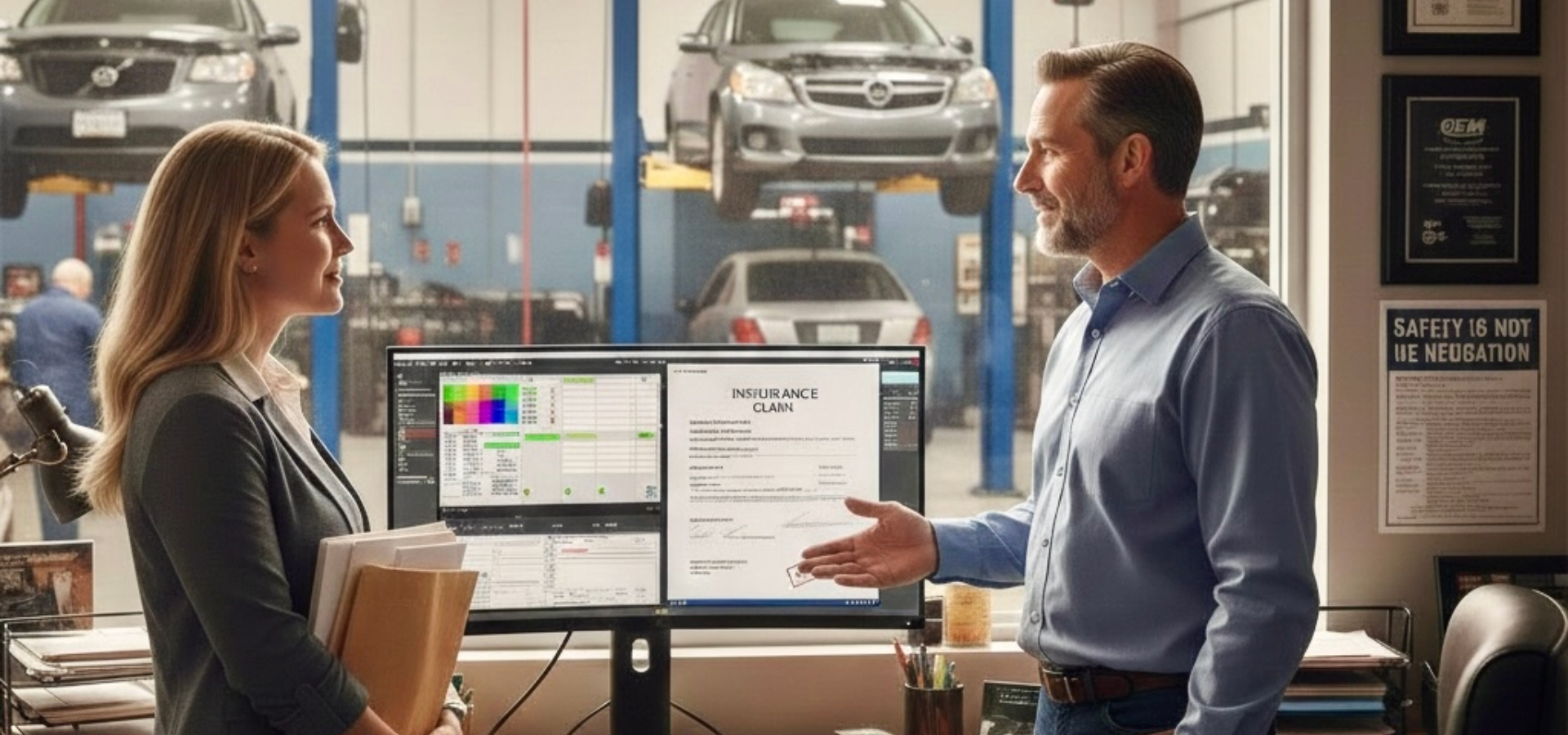
ADAS calibration sits at the intersection of safety, technology, and insurance reimbursement. As advanced driver assistance systems become standard on modern vehicles, body shops are increasingly required to justify when and why calibrations are necessary. For many shops, that conversation has become a point of friction with insurance adjusters.
The reality is that ADAS calibration does not need to be a negotiation. When calibration decisions are grounded in OEM requirements, supported by clear documentation, and communicated early, approvals become far more predictable. The goal is not to argue, but to establish a professional, repeatable process that restores vehicles to manufacturer standards and protects everyone involved.
This article explains why ADAS calibration is often scrutinized, how insurers typically evaluate these charges, and how shops can set a strong precedent that reduces delays, denials, and rework while advocating for vehicle safety.
Need help finding the right ADAS frame? Use our free ADAS Equipment Advisor.
Why Insurers Scrutinize ADAS Calibration
Insurance and collision repair have always operated under different pressures. Insurers focus on cost control. Body shops are responsible for restoring vehicles to pre-collision condition. ADAS calibration has intensified that tension because it is relatively new, highly technical, and historically inconsistent across the industry.
Early on, insurers saw wide variation in how shops handled calibration. Some billed for it consistently. Others did not. Documentation varied, and procedures were not always clearly explained. From an insurer’s perspective, that inconsistency created uncertainty, not about safety but about necessity and verification.
As a result, ADAS calibration became an area of scrutiny. This is not because calibration is optional, but because insurers want clarity and consistency around when it is required and how it is documented.
How Insurers Review ADAS Calibration
Insurance approval for ADAS calibration typically hinges on three factors: necessity, causation, and verification.
Adjusters want to understand why calibration is required, how the repair created the need, and how the work can be verified. When any of those elements are unclear or poorly documented, approval becomes more difficult.
This is where many shops struggle, not because the calibration isn’t required, but because the documentation does not clearly connect the repair to the OEM requirement. Insurers rely on process and paperwork. When those are weak, even valid procedures can be delayed or denied.
OEMs Define When Calibration Is Required
OEMs determine calibration requirements based on engineering, safety standards, and system design, not cost or opinion.
Manufacturers specify calibration whenever certain repairs are performed because those repairs can affect sensor position, vehicle geometry, or system reference points. From the OEM’s perspective, restoring a vehicle to pre-collision condition means restoring the accuracy of its safety systems.
Common triggers include windshield replacement, bumper removal, camera or radar removal and installation, suspension or alignment work, and structural repairs. In some cases, manufacturers require calibration simply because a vehicle was involved in a collision.
This is not a judgment call by the shop. It is a manufacturer requirement tied directly to vehicle safety.
ADAS Safety Starts and Ends With the Repair Shop
Vehicle owners generally do not understand ADAS systems or calibration requirements. They trust the body shop to restore their vehicle safely and correctly. That places the shop in a critical role as a safety advocate.
Following OEM calibration requirements is not just about reimbursement. It is about ensuring that safety systems function as designed after repairs are completed. When shops adhere to manufacturer specifications, they are advocating for the driver, passengers, and everyone else on the road.
That advocacy must be supported by documentation that clearly shows compliance with OEM standards. This is where approval conversations are either resolved quickly or become prolonged.
OEM Position Statements: The Foundation for ADAS Approval
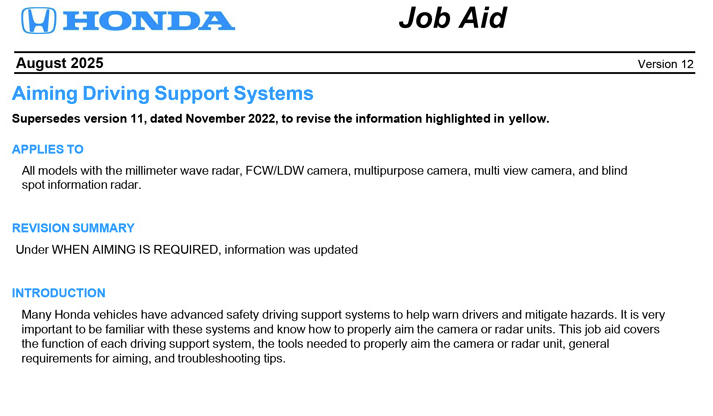
OEM position statements are one of the most effective tools for documenting ADAS calibration requirements. Issued directly by vehicle manufacturers, they clarify what is allowed or required across a model lineup and remove guesswork from repair decisions.
As outlined by I-CAR in its Repairability Technical Support (RTS) guidance on OEM Position Statements, these documents help shops tie calibration decisions directly to manufacturer intent rather than assumptions, scan results, or insurer interpretation.
By referencing OEM position statements alongside OEM repair procedures, shops can document calibration needs based on published manufacturer guidance—not opinion. This reduces manual research, supports safe and complete repairs, and helps explain why calibration is required to restore the vehicle to OEM standards.
Including OEM position statements with estimates or supplements shifts approval conversations away from debate and toward documented OEM requirements, making ADAS calibration decisions easier to support, defend, and approve.
Documentation Drives Approval
Strong documentation turns safety advocacy into an approvable insurance process.
Effective ADAS submissions typically include pre-repair scans, post-repair scans, baseline documentation showing what was repaired or replaced, and OEM repair procedures or position statements that support calibration requirements. When these materials are provided early, ideally before or alongside supplements, they set expectations clearly.
Poor documentation creates friction. Clear, consistent documentation builds trust.
Over time, shops that submit the same reports, reference the same OEM sources, and follow the same process establish credibility with insurance partners. That consistency is how precedent is set.
Tools That Strengthen Documentation
As ADAS procedures have become more complex, many shops rely on software tools to help ensure documentation is complete and consistent. These tools do not replace OEM repair procedures, but they can help surface, organize, and validate what those procedures require.
Software such as adasThink and REVV analyze repair operations and flag ADAS-related procedures that may be required based on OEM specifications. Used properly, they help identify requirements early, standardize documentation, and reduce subjective explanations during insurance review.
For insurers, this clarity speeds review. For shops, it supports a repeatable, defensible calibration process.
Handling Insurance Pushback
Insurance objections often reflect uncertainty rather than refusal. Statements like “We don’t see why this is needed” or “That shouldn’t be included” are best addressed with OEM documentation, not debated. Repair procedures, position statements, and clear calibration reports shift the conversation from opinion to fact.
Professional, consistent responses grounded in manufacturer guidance keep discussions productive and focused.
Why Cost Comparisons Fall Short
ADAS calibration is a safety-critical operation. Comparing it purely on price ignores differences in equipment, environment, training, and process.
The goal is not to be the cheapest. The goal is to perform the procedure correctly, verify it properly, and document it thoroughly. When shops anchor their approach to safety and precision, approval decisions become less subjective and more process-driven.
Proper calibration also protects the shop. If a vehicle is not restored to manufacturer specifications and an incident occurs later, responsibility does not fall on the insurer; it falls on the repair facility.
Setting the Precedent
Well-run collision repair shops set expectations early by identifying ADAS calibration requirements using OEM repair procedures, OEM position statements, and clear documentation on every repair. When requirements are documented upfront and presented consistently, approvals become more predictable and insurer relationships strengthen over time.
Setting the precedent for ADAS calibration is ultimately about safety, documentation, and OEM alignment. When those elements are handled consistently, approval becomes a process, not a battle.
What to Do Next
If this article helped clarify how insurers view ADAS calibration, the next step may simply be a conversation about how calibration fits into your shop. We’re happy to talk through your situation, answer questions, and help you understand what makes sense now—and what can wait.