Congratulations! Buying ADAS equipment is one of the smartest long-term investments a shop like yours can make.
But just like with any big purchase, you want to make sure you get the most out of it from the start. This article helps you think through what comes next by walking through sequence, setup, and integration inside a real shop environment.
The goal is straightforward: make getting started easier by understanding how ADAS becomes a working part of your shop, not just a piece of equipment on the floor.
You’ve already decided to bring ADAS calibration in-house. That alone says something about your operation. You take on complex work, invest in capability, and don’t shy away from precision. ADAS is another skilled operation in the shop. Like any other, it needs to be introduced correctly.
When the equipment arrives, the instinct is to unbox it and start using it. But slow down. From our experience, the shops that do best pause long enough to set the operation up properly. How ADAS is introduced early determines whether it becomes a smooth, repeatable service or something that stays harder than it needs to be.
Let’s dive in together.
Need help finding the right ADAS frame? Use our free ADAS Equipment Advisor.
ADAS Calibration: Capability vs. Results
Buying ADAS equipment gives you capability, not results. Results come from how that capability is built into your workflow.
Most early issues aren’t caused by the system itself. Issues show up when calibration is treated like a switch instead of a process. ADAS needs to be introduced with the same discipline used for alignment, diagnostics, programming, or structural repair equipment, with clear ownership, defined steps, and standards that don’t change from job to job.
This phase is about direction, not speed.
Getting the Shop Ready Before Calibration Starts
Before calibration ever begins, the environment needs attention. ADAS calibration is sensitive work, and the physical space becomes part of the process.
Key factors that matter:
- Floor levelness: Even slight pitch or unevenness can affect target alignment and sensor readings.
- Lighting: Shadows, glare, or inconsistent lighting can interfere with cameras and sensors.
- Clear space: Targets and frames need unobstructed air around the vehicle to be read correctly.
Addressing these items early prevents time-consuming troubleshooting later that isn’t related to software or equipment.
Training Before Production
Training should come before customer vehicles are on the line. This isn’t about mindset; it’s about knowing the procedure before the job starts.
When technicians understand the sequence, setup, and checks that matter, calibration runs cleaner. Bays stay productive. Rework drops. Hands-on training on real vehicles accelerates this learning far more effectively than manuals alone.
The goal isn’t speed. The goal is repeatability.
Setup and Organization Are Part of the ADAS Process
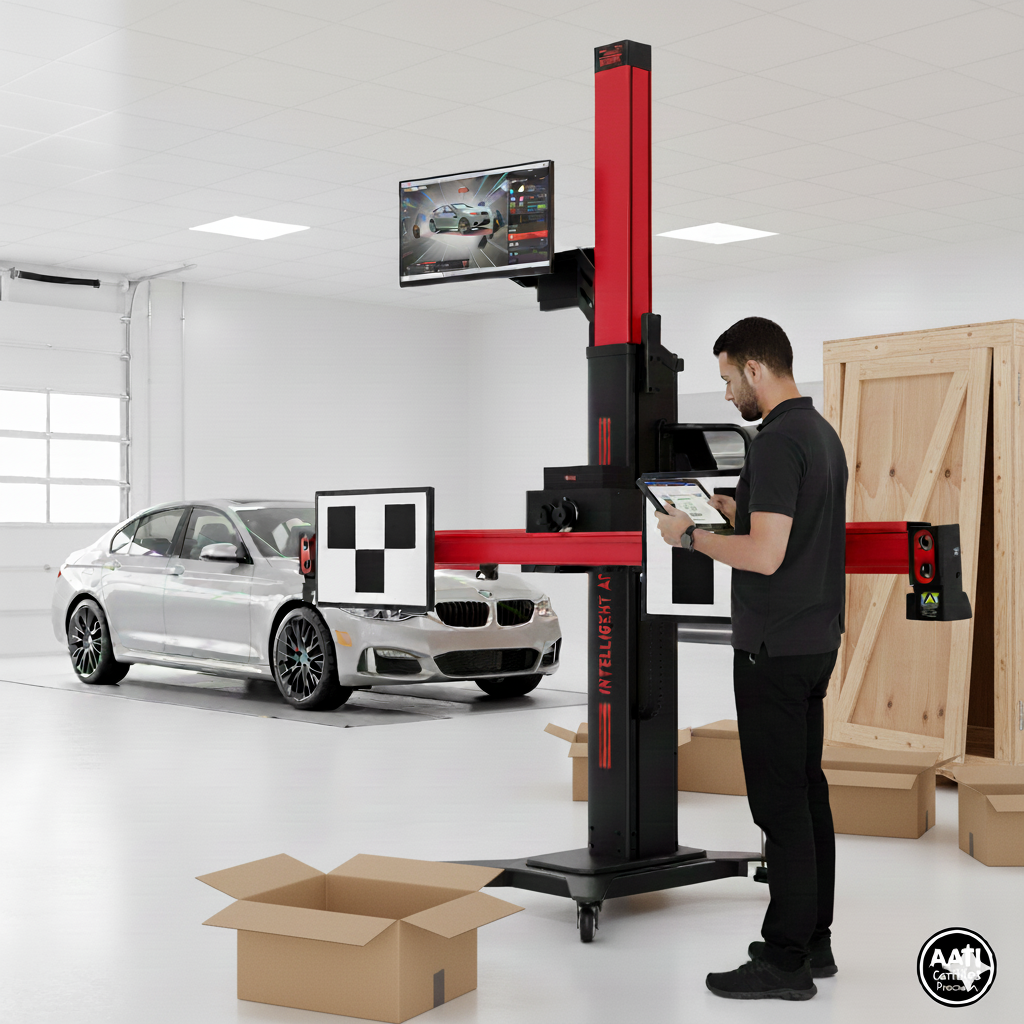
Unpacking is where the process really starts.
When technicians handle the targets and components themselves, they learn what each piece does and where it belongs. A well-organized ADAS area supports:
- Faster setup
- Fewer missing or misplaced components
- More consistent calibration results
- Quicker vehicle calibrations
This is one of those areas where doing it right once saves time on every job that follows.
Sequence First, Tools Second
ADAS setup often requires confirming target placement, distances, and vehicle-specific requirements. Autel provides reference tools such as the ADAS Setup Reverse Lookup Guide, which allows technicians to verify requirements by make, model, and year before setup begins.
Tools like this support accuracy when they’re used inside a structured workflow. Autel reinforces this point in its article Simplifying the ADAS Opportunity. ADAS calibration is not a single step. It is part of a connected sequence that includes:
- Pre-scan
- Vehicle inspection
- Proper setup
- Calibration
- Post-scan verification
When those steps are treated as isolated tasks, requirements get missed. When they’re treated as a connected process, calibration becomes more predictable and easier to manage.
Common Early Gaps to Watch For
ADAS issues often emerge when assumptions are made too early in the process. A technician may complete a calibration successfully and see the system clear, but still miss steps that define when the job is truly finished. On the surface, the vehicle leaves the shop with no warning lights and no immediate issues.
In some cases, a static calibration is only part of the process. Certain systems require a dynamic calibration afterward, which involves a controlled test drive that allows cameras and sensors to calibrate in real-world conditions. During this drive, the system confirms proper operation by recognizing lane markings, traffic signs, and surrounding vehicles at specified speeds. These drives often take 10 to 30 minutes and require clear road conditions and defined parameters to complete correctly. Dynamic calibration is a common and efficient method for recalibrating features such as lane keep assist and adaptive cruise control following repairs like windshield replacement or wheel alignment.
These gaps usually do not surface on the first job. They become noticeable as more vehicles move through the process, conditions vary, or different technicians are involved. A single successful calibration can create the impression that the workflow is set, even though expectations around verification and job completion have not been fully defined.
Addressing this early helps technicians understand what “complete” actually means beyond a software result. That clarity supports consistency on the floor and makes the operation easier to manage as calibration volume increases.
Integrating ADAS Into the Business
Calibration does not end when the procedure finishes. For ADAS to function as a reliable service line, it must be integrated into estimating, documentation, and invoicing in a consistent way.
This is where alignment matters most. When estimating anticipates calibration, when supporting records are captured as part of the workflow, and when invoicing reflects the work performed, ADAS fits naturally into daily operations. When those pieces are disconnected, calibration becomes harder to manage than it needs to be.
Treating ADAS as a business operation, not just a technical task, gives shops more control over payment timing, internal accountability, and long-term performance. Early decisions around workflow ownership and process structure tend to carry forward, shaping how smoothly the operation runs over time.
From New Equipment to Normal Workflow
After a period of following a structured approach, things settle in. Technicians know the process. Calibrations move through without surprises. Documentation and invoicing become routine. Support is needed less often.
ADAS stops feeling new. It becomes another skilled service your shop performs in-house, one that supports cycle time and adds revenue. You already do hard work every day. ADAS calibration isn’t different. It just needs to be set up right.
By now, you should have a clearer picture of what happens after the equipment arrives and where early decisions make the biggest difference. When ADAS calibration is introduced with clear sequence, ownership, and expectations, it becomes easier to manage and easier to scale.
If you’d like to talk through how this applies to your shop, whether it’s layout, workflow, or next steps, reach out. We’re always glad to have a practical conversation about what you’re working toward and how ADAS fits into your operation.