As collision repair shops make decisions about ADAS calibration equipment, tax planning is often treated as a separate conversation, sometimes an afterthought. Looking back, many shops ask the same questions: Did we take full advantage of available tax incentives? Could we have structured equipment purchases differently?
If the answer is "not this time," that’s okay.
The important part is understanding that opportunities like Section 179 don’t disappear; they reset. And it’s never too early to start planning how future capital equipment investments can reduce tax exposure, improve cash flow, and support long-term ADAS revenue.
Over the years, we’ve worked with dozens of collision repair shops as they evaluate ADAS calibration and other major equipment investments. Through those conversations, we’ve helped shops understand the financial tools available to them, including how tax planning, leasing, financing, and long-term ROI considerations should fit into real operational decisions, based on what we see work in practice across many different shop environments.
By the end of this article:
- You’ll have a clear picture of the financial tools available to you, such as Section 179, leasing, financing, and ROI planning.
- How they can be used together to reduce costs, improve cash flow, and support long-term ADAS calibration revenue.
Need help finding the right ADAS frame? Use our free ADAS Equipment Advisor.
Why Many Body Shops Are Just Now Connecting ADAS Investment and Section 179
Most collision shop owners don’t follow tax law changes closely. Section 179 typically comes up during tax prep, not when equipment decisions are being made. At the same time, ADAS calibration has only recently become a meaningful capital investment for independent shops.
As the automotive industry moves toward making ADAS systems standard on nearly every vehicle, that shift is now showing up in collision and repair shops. Calibration, once an occasional or sublet service, has become a routine requirement tied directly to cycle time, repair quality, and customer expectations.
What IRS Section 179 Does (Plain English)
As explained by First Citizens Bank, Section 179 allows qualifying business equipment, including financed equipment, to be expensed in the year it is placed in service rather than depreciated over multiple years, helping shop owners better understand the after-tax impact of a capital purchase.
This can reduce taxable income in the year of purchase and improve the year-one cash impact of an investment, while remaining a timing consideration rather than a reason to buy equipment.
IRS Section 179 Threshold Changes Introduced in 2025
For 2025, Section 179 thresholds increased, making it possible for businesses to expense a larger portion of qualifying equipment in the year it is placed in service.
Under the current rules, up to $2.5 million in qualifying equipment may be expensed, with the phase-out threshold increased to $4 million in total purchases.
For most independent collision repair shops, ADAS calibration equipment falls well below these limits, making Section 179 easier to apply and more practical to include in planning conversations around calibration systems, alignment integration, scan tools, and related equipment.
A Real-World Collision Shop Example
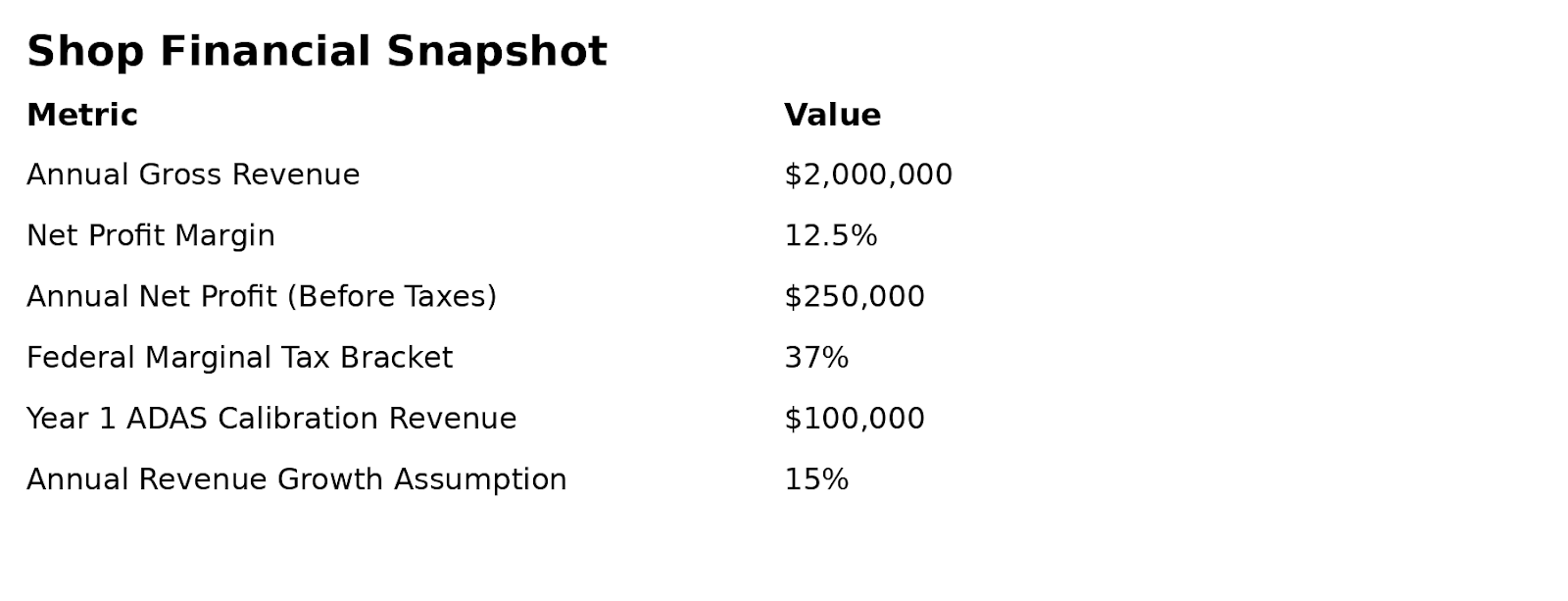
Rather than theory, the tables below show a simple, realistic scenario for a high-performing independent collision repair shop. This profile reflects a shop that is already operating well and considering ADAS calibration as a business capability, not a one-time expense.
The example is designed to show how the pieces fit together.
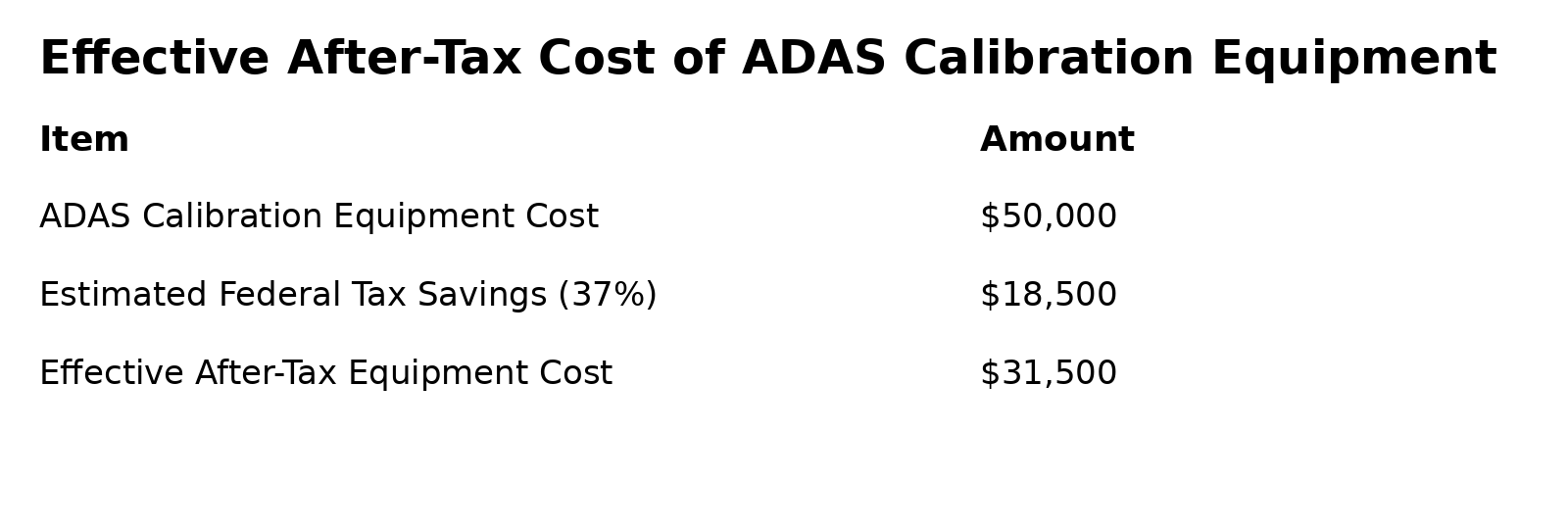
A $50,000 ADAS calibration equipment purchase can reduce a high-performing shop’s federal tax bill by approximately $18,500. While the equipment still costs $50,000 upfront, the effective after-tax impact is closer to $31,500. Actual tax savings vary based on tax rate, business structure, and advisor guidance.
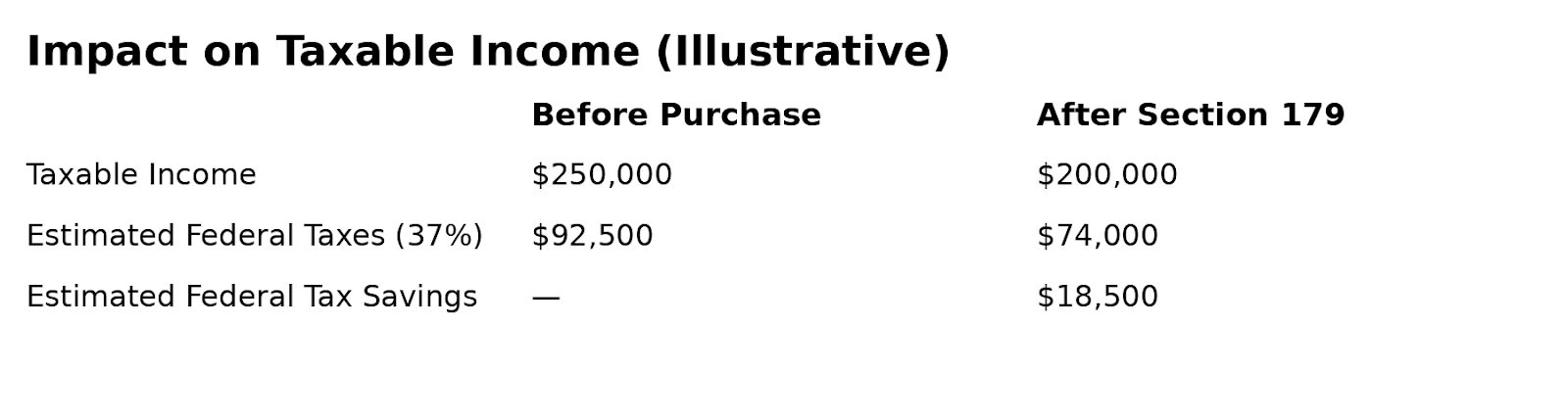
This illustrates how Section 179 affects timing, not total cost. The business still invests in equipment, but the tax impact is felt sooner.
How Leasing Changes the Conversation
Many shops assume Section 179 only applies to cash purchases. In reality, many financed or leased equipment arrangements may still qualify, depending on how they’re structured. Eligibility depends on the specific terms of the agreement and should be confirmed with a qualified tax advisor. Agreements that function like a purchase, where the shop retains control, responsibility, and a clear path to ownership, may be eligible for Section 179 treatment.
From a planning standpoint, leasing can lower upfront cash outlay, create predictable monthly payments, and better align equipment costs with calibration revenue as it ramps up. For some shops, this allows ADAS investment decisions to be made with more flexibility, rather than concentrating the financial impact into a single year.
Looking Beyond Year One: Calibration Revenue Over Time
Tax savings matter, but ADAS calibration is ultimately justified by revenue and operational impact. Below is a simple three-year view using conservative growth assumptions.
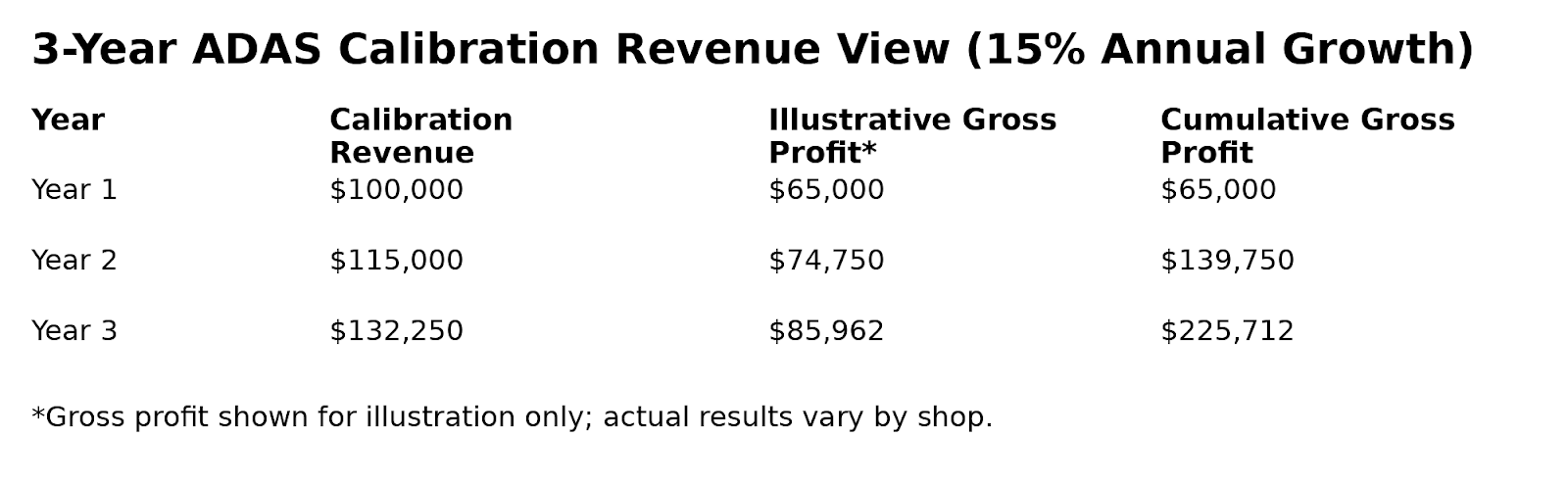
With modest 15% annual growth, cumulative gross profit exceeds the effective after-tax equipment cost early and continues to compound. The equipment remains in service well beyond year three, supporting ongoing revenue.
Why Taxes Are Only One Part of the ROI Story
Section 179 affects taxes. ADAS calibration affects operations. Shops that bring calibration in-house often see benefits beyond tax savings:
- Fewer sublets
- Better control over cycle time
- Reduced scheduling friction
- New billable services
- Revenue that continues year after year
Tax planning can help with timing, but long-term ROI comes from consistent use and integration into daily workflow.
Smart Next Steps If This Is New to You
If Section 179 or ADAS calibration planning is new for your shop, a few simple steps can help:
- Add Section 179 to your next conversation with your business tax advisor
- Ask how equipment purchases affect taxable income and cash flow
- Compare leasing versus purchasing scenarios
- Separate tax planning from operational readiness discussions
Understanding the basics is often enough to decide whether deeper analysis makes sense.
A Strategy That Helps You Get Started Quicker
Recent changes to Section 179 have made tax planning more relevant for collision repair shops evaluating ADAS calibration investments. As ADAS becomes a routine part of modern repairs, equipment decisions increasingly affect not just capability, but cash flow, timing, and long-term returns.
When shops understand how tax planning, leasing, and calibration revenue work together, equipment purchases can be evaluated in a broader business context. That perspective helps owners plan more deliberately and align investments with long-term operational goals.
If this topic is on your radar, a logical next step is a conversation. Start with your tax advisor and, if helpful, continue with a partner who understands how ADAS calibration fits into real shop operations. These conversations can bring clarity well before any equipment decision is made.